Fire is the cornerstone of survival. It provides warmth, purifies water, cooks food, signals rescuers, and boosts morale. Yet most people only know one way to start a fire – and it requires a lighter that works.
In true survival situations, you need backup plans for your backup plans. Here are seven fire-starting techniques that could save your life.
Difficulty: Hard | Reliability: High (with practice)
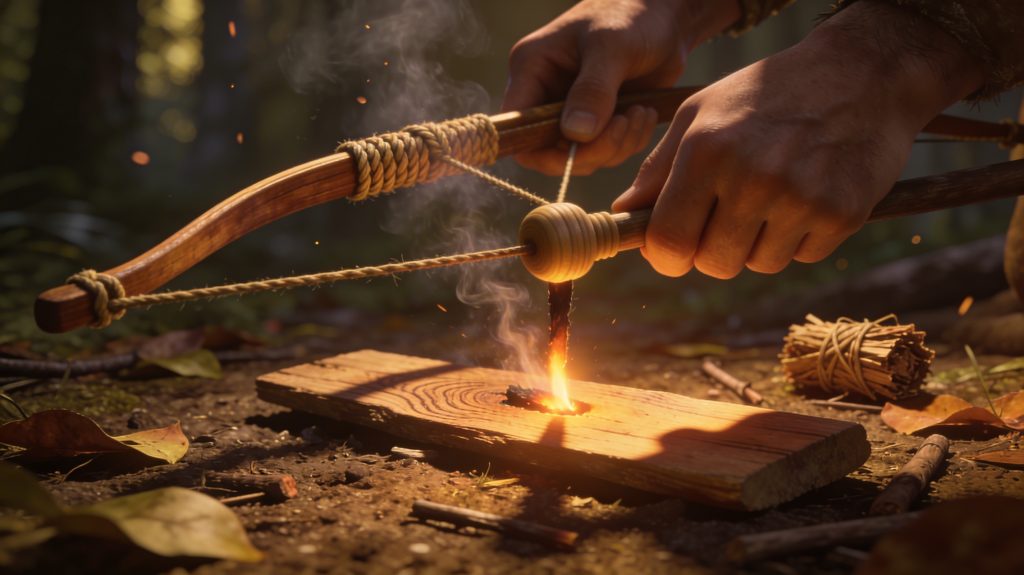
The bow drill is the most efficient primitive fire-starting method.
What you need:
How it works:
Pro tip: Practice this 20 times before you actually need it. It’s harder than it looks.
Difficulty: Medium | Reliability: Very High
One of the oldest and most reliable methods.
What you need:
How it works:
Why it’s great: Works when wet, lasts thousands of strikes, no moving parts to break.
Difficulty: Easy | Reliability: Excellent (in sunlight)
Harness the sun’s power to create fire.
What you need:
How it works:
Creative alternatives: Water-filled clear plastic bag, ice lens carved into convex shape, bottom of soda can polished with chocolate or toothpaste.
Difficulty: Very Easy | Reliability: Excellent
Modern materials make fire embarrassingly easy.
What you need:
How it works:
Alternative: Battery + gum wrapper (touch foil ends to terminals, center ignites).
Difficulty: Very Hard | Reliability: Medium
Primitive method requiring serious elbow grease.
What you need:
How it works:
Reality check: This is exhausting. Only use if other methods fail.
Difficulty: Easy | Reliability: High (prep required)
Mix common chemicals for instant ignition.
Common combinations:
⚠️ Safety warning: Only use if trained. Chemical burns are real. Store ingredients separately.
Difficulty: Very Hard | Reliability: Low to Medium
The original fire method – hardest of all.
What you need:
How it works:
Truth: This is brutal on your hands and rarely works for beginners. Master the bow drill first.
Minimum kit includes:
Layer your redundancy: Three is two, two is one, one is none.
You can make sparks all day, but without proper tinder, you’ll have no fire.
Best natural tinders:
Keep tinder bone-dry in waterproof container. Wet tinder = no fire.
Fire-starting is 80% preparation, 20% execution. The best method is the one you’ve practiced. Carry multiple options, practice in different weather conditions, and always gather tinder before you need it.
Action step: This week, start a fire using a method you’ve never tried. Master it before you need it.
Your turn: When you’re cold and soaked, fire is life—but it’s only one part of survival. Download the free 7 Days Emergency Plan below so you know what to do before and after you get that first flame going.