It happens fast. One winter evening the lights flicker, then go out completely. The hum of the refrigerator stops. The furnace fan goes quiet. Within an hour, the temperature in your apartment starts dropping, and you realize you have no flashlight, no plan, and a phone at 22 percent battery. If that scenario sounds familiar — or just a little too possible — this guide is for you.
A winter power outage does not have to become a cold, stressful emergency. With a little preparation ahead of time, you can stay warm, safe, and calm in your home — even if you live in a small apartment in the middle of a city. This article walks you through exactly what to expect and what to do about it, step by step.
At Survival Tips Central, we believe the best emergency plan is one that is simple enough to actually follow. So let’s get into it.
Most people assume a power outage is just an inconvenience — a few hours without Netflix. In winter, it is a different situation entirely.
An apartment or small home loses heat faster than you might expect. Without the furnace or electric baseboard heaters running, indoor temperatures can fall fast — especially in older buildings or during extreme cold. A home that was a comfortable 68°F when the power went out can feel noticeably colder within just a few hours, and significantly colder by morning if temperatures outside are in the teens or single digits.
It is not just the heat that stops. Most modern gas furnaces rely on electric ignition and blowers, so they go offline too. Electric stoves and ovens stop working. The lights go out. Your Wi-Fi router loses power. And depending on the outage, your cell signal may become unreliable as local towers get overwhelmed.
City residents sometimes assume they are safer than people in rural areas during a blackout. In some ways that is true — emergency services are closer. But city living has its own complications. Elevators stop working, which is a real problem if you are on the eighth floor. Shared heating systems in large apartment buildings are completely out of your control. And in a widespread outage, the sheer number of people affected means longer waits for utility crews to restore power.
The good news: none of this has to catch you off guard. Preparation makes all the difference.
When the power goes out in winter, focus on four things: heat, light, food and water, and communication. Get these four areas covered before a storm hits, and you will be in solid shape.
Your first job is to keep your body temperature up. You do not need a fireplace or a generator to do this — you need layers and a smart strategy.
Start with clothing. Dress in layers: a moisture-wicking base layer (like thermal underwear), a warm middle layer (a fleece or heavy sweater), and an outer layer if it gets very cold. Add a knit hat, warm socks, and gloves. You lose a surprising amount of heat through your head and hands, even indoors.
Next, pick one room in your home to be your “warm room.” Close the doors to unused rooms and gather everyone — and your warmest blankets — into that one space. Body heat adds up, and a smaller space holds warmth much longer than a whole apartment.
Use sleeping bags if you have them. A good sleeping bag rated for cold temperatures can keep you comfortable even when indoor temps drop into the 50s.
When it comes to supplemental heat sources, safety is everything. Never use a generator indoors — not in your home, garage, basement, or near any door, window, or vent. Never use a gas stove or oven to heat your home. Never use a charcoal grill, camp stove, or any fuel-burning device indoors. All of these produce carbon monoxide, a colorless, odorless gas that builds up quickly in enclosed spaces and can be deadly. Make sure you have a working carbon monoxide detector with fresh batteries — this is especially important any time a fuel-burning appliance or fireplace is in use. When in doubt, layers and blankets are your safest option.
Common mistake: Relying on unsafe heating methods or assuming the furnace will keep working when the power is out. Most modern furnaces — gas or otherwise — need electricity to run. Check yours now, before you need it.
Darkness adds stress to an already difficult situation. It also makes it easy to trip, fall, or misplace important items. Having reliable light sources that are separate from your phone is one of the simplest and most important things you can do.
Aim for at least one dedicated flashlight per person in your household. Keep them in the same spot every time so you can find them in the dark. A battery-powered or rechargeable lantern for your main room is even better — it lights up a whole space and frees your hands.
Stock up on extra batteries in the sizes your flashlights and devices use. And keep at least one fully charged battery bank (portable phone charger) ready to go. Charge it every few months so it is ready when you need it.
Common mistake: Counting on your phone flashlight, then draining the battery you need for calls and updates. Your phone is a lifeline during an outage — protect that battery by using a separate light source.
You do not need a fancy emergency food supply to be prepared. You need a small stockpile of foods your family actually eats, that require little or no cooking.
Think: canned soup, canned chili, canned beans, peanut butter, crackers, granola bars, dried fruit, nuts, and shelf-stable milk. These foods keep well, require no refrigeration, and most can be eaten at room temperature. The golden rule here is store what you actually eat — emergency food that nobody likes will just sit there unused.
One item people forget constantly: a manual can opener. It costs about three dollars and makes the difference between eating and not eating when the power is out.
A quick note on your refrigerator and freezer: if the power goes out, keep the doors closed as much as possible. A refrigerator will keep food safe for about 4 hours if left unopened. A full freezer will hold safe temperatures for about 48 hours; a half-full freezer for about 24 hours. When in doubt, follow the rule: when in doubt, throw it out.
For water, follow standard U.S. emergency guidance: store at least 1 gallon of water per person per day for at least 3 days, for both drinking and sanitation. For a family of four, that means at least 12 gallons on hand. Store water in food-grade containers in a cool, dark place. If you filled the containers yourself using tap water, rotate and replace every six months. For commercially bottled water, follow the expiration dates on the packaging. If you have pets, factor in their needs too.
Common mistake: Buying foods nobody in the family likes, or forgetting a manual can opener. Walk your pantry right now — if your emergency food looks nothing like what you normally eat, swap it out for things your family will actually want when they are stressed and cold.
During a winter power outage, staying informed is just as important as staying warm. You need to know whether the outage is expected to last two hours or two days, whether roads are safe, and whether there are warming centers open nearby.
Before a storm hits, charge every device in your home fully. Keep a battery bank topped off. Download your local utility’s outage map app if they have one. Sign up for local emergency text alerts from your city or county — most areas in the U.S. offer these for free.
One piece of gear that is easy to overlook: a battery-powered or hand-crank weather radio. When cell towers are overloaded or your phone battery dies, a weather radio can still pull in NOAA Weather Radio broadcasts and emergency alerts. It is a low-cost, high-value item for any emergency kit.
Finally, write down your most important phone numbers on paper. In an outage, your phone may be dead or unavailable, and you may not remember your sister’s cell number or your building manager’s contact from memory.
Common mistake: Assuming cell service and Wi-Fi will always be there in a major outage. In a widespread winter storm, towers can get overloaded or lose backup power. Have a backup plan that does not depend on the internet.
Living in a city apartment does not mean you cannot be prepared — it just means you need to be a little more creative with storage and planning.
The good news is that most of what you need fits in a single plastic storage tote or a dedicated shelf in a closet. You do not need a basement full of supplies. You need a compact, organized kit that you know exactly how to use.
Small space living is not a barrier to being prepared. It just means your kit needs to be lean, organized, and easy to grab.
Here is a straightforward four-step plan you can put together this week. You do not need to spend a lot of money or time — just work through each step and you will have a solid foundation.
Step 1: Pick your warm room. Walk through your home and identify the smallest, most insulated room — usually an interior bedroom. Decide now that this is where everyone gathers when the power goes out. Make a list of the blankets, sleeping bags, and warm clothing layers you will keep accessible there.
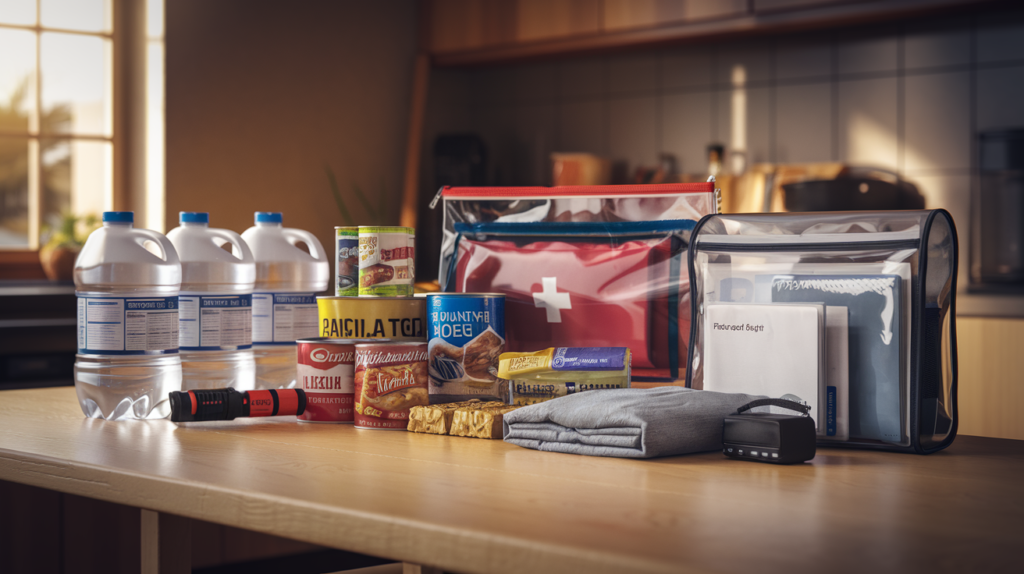
Step 2: Build your blackout bin. Get one plastic storage tote and fill it with the basics: flashlights, extra batteries, a battery bank, hand warmers, a weather radio, a manual can opener, a few days of shelf-stable food, and a printed list of important phone numbers. Label it clearly and keep it somewhere easy to reach.
Step 3: Handle your water supply. Pick up a few food-grade water jugs or cases of bottled water and store them in a cool, dark spot. Aim for at least 1 gallon per person per day for at least 3 days. A family of four needs at least 12 gallons. Set a reminder to check and rotate your supply every six months.
Step 4: Set up your early warning system. Sign up for your local emergency alert system. Download your utility’s outage app. Charge your battery bank fully and make a habit of checking it every month. When a winter storm is in the forecast, charge all devices to 100 percent the night before.
That is your basic home emergency plan for a winter power outage. It is not complicated — it just needs to be done. Review your gear list once a season, and you will be ready for whatever winter brings.
You do not need to buy everything at once or overhaul your entire home to be prepared for a winter power outage. Most people build their setup gradually — picking up a battery bank one week, adding a few canned goods the next, grabbing an extra blanket at a weekend sale. Small, steady steps add up to real readiness.
What matters most is starting. Choose one thing from this guide and do it this week. Maybe it is finding your warm room and pulling out the extra blankets. Maybe it is ordering a battery-powered lantern or filling a few water jugs. Whatever it is, take that one step.
At Survival Tips Central, we are big believers in practical preparedness — the kind that fits real life, real budgets, and real spaces. A winter power outage is one of the most common emergencies U.S. households face. The good news is it is also one of the most manageable ones, once you have a plan in place.
Use the simple plan above as your guide. Build your blackout bin. Know your warm room. And the next time the lights go out on a cold winter night, you will be ready.